
Published 2026-09-17 · 10 min
Payment reminder examples for business customers: full guide + templates
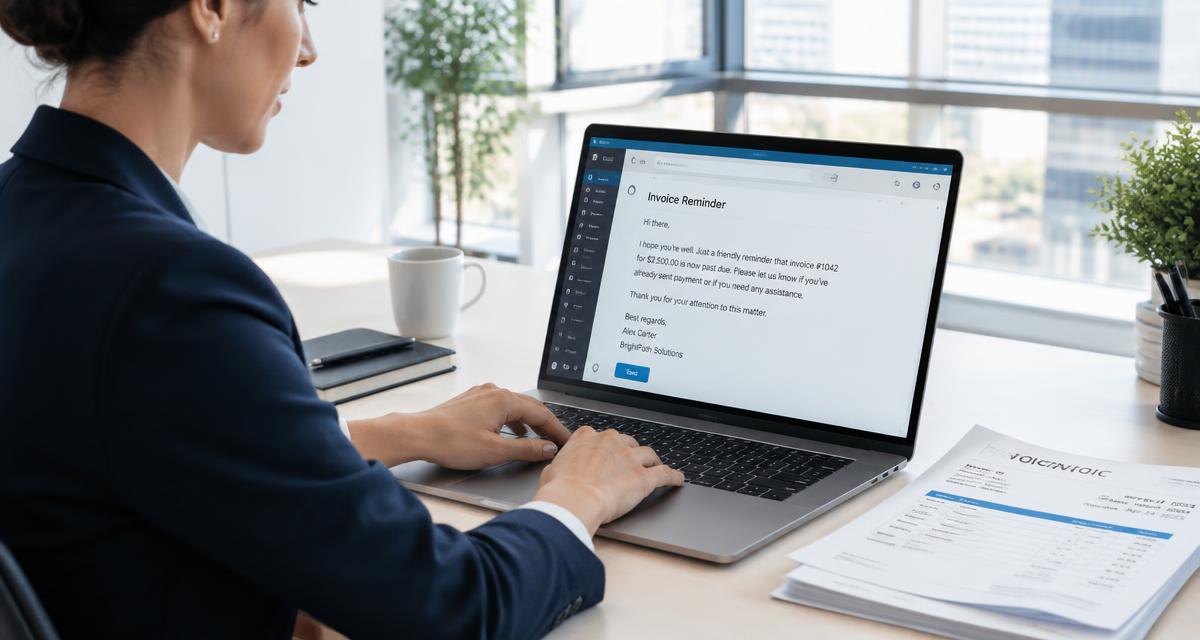
A business customer paying late is one of the biggest frustrations for European SMEs. How you write the reminder determines whether you get paid on time and keep the relationship intact. This article gives you three ready-to-use payment reminder templates for business customers (B2B) — friendly reminder, formal demand and notice of default — with the right legal tone, 2026 interest rates and the recovery costs you may charge.
Why a good payment reminder matters
A significant share of SME invoices is not paid within the agreed term. That hits cash flow immediately: staff, stock and suppliers still need to be paid on time, even when your customer does not pay you.
A well-structured reminder sequence means you:
- get paid faster without putting the customer relationship at risk;
- stand on solid legal ground if the claim escalates;
- charge statutory interest and recovery costs correctly, so you leave no money on the table;
- come across as professional and consistent to business partners.
When to send a payment reminder to a business customer
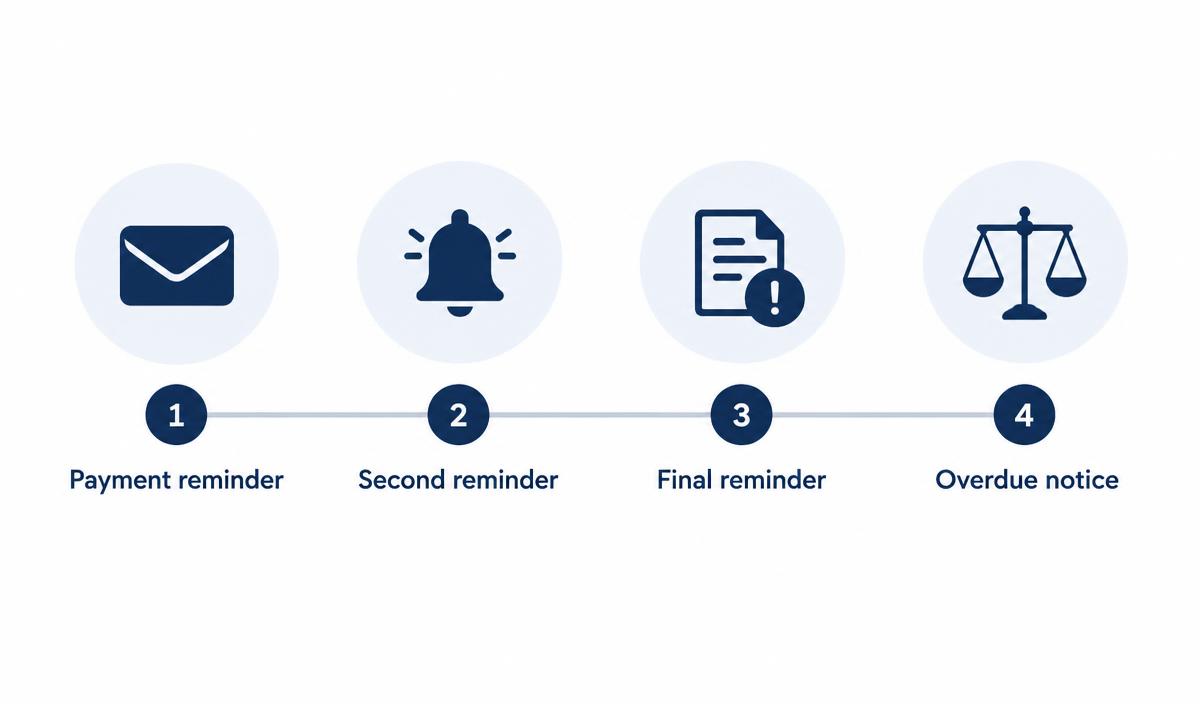
A common and legally sound sequence for B2B invoices looks like this:
- Day 0 — invoice sent, the payment term (usually 14 or 30 days) starts.
- Day 1 after the due date — friendly payment reminder.
- Day 7 to 10 after the first reminder — formal demand with a hard deadline.
- Day 14 after the demand — final demand and notice of default, announcing interest and recovery costs.
- After the final deadline — start of the formal recovery procedure.
Note: unlike consumers, business customers are not protected by a mandatory pre-notice in most jurisdictions. Under EU Directive 2011/7/EU interest and a fixed EUR 40 compensation fall due automatically once the term expires. Sending reminders anyway strengthens your position and preserves the relationship.
Template 1: the friendly reminder
Send this shortly after the payment term expires. The tone is neutral and assumes an oversight.
Subject: Reminder — invoice [invoice number] still outstanding
Dear [contact name],
While reviewing our records we noticed that invoice [invoice number] of [invoice date], for EUR [amount], has not yet been received. The payment term expired on [due date].
The payment may still be in transit, or the invoice may have escaped your attention. Could you transfer the amount as soon as possible, and no later than 7 days from now, to account [IBAN], quoting invoice number [invoice number]?
Did you not receive the invoice, or do you have questions about the amount? Please contact us at [phone] or [email].
Kind regards, [name], [company]
Template 2: the formal demand
No response to the first reminder? Follow up with a firmer tone and a hard deadline.
Subject: Formal demand — invoice [invoice number] still unpaid
Dear [contact name],
On [date of first reminder] we sent you a reminder regarding invoice [invoice number], for EUR [amount]. To date we have not received payment.
We urge you to transfer the outstanding amount within 7 days of the date of this letter, so no later than [new deadline], to account [IBAN], quoting invoice number [invoice number].
If payment is not received after this period, we will charge statutory late payment interest and recovery costs as permitted by law.
We trust this information is sufficient and look forward to receiving your payment.
Kind regards, [name], [company]
Template 3: final demand and notice of default
This is the formal letter that places the customer in default and forms the basis for any recovery procedure.
Subject: Final demand and notice of default — invoice [invoice number]
Dear [contact name],
Despite our earlier reminders on [date 1] and [date 2], we have still not received payment of invoice [invoice number], dated [invoice date], for EUR [amount].
By means of this letter we formally place you in default. We request full payment of the outstanding amount within 14 days of the date of this letter, so before [end date], to account [IBAN], quoting invoice number [invoice number].
If payment is not received within this period, we will charge statutory late payment interest from the due date, the fixed compensation of EUR 40 and further recovery costs, and we may hand the file over for recovery, which can result in additional costs for you.
We regret having to take this step and hope for a swift resolution.
Kind regards, [name], [company]
Interest and recovery costs in 2026
Under the EU late payment directive, commercial interest is at least eight percentage points above the ECB reference rate, plus a fixed EUR 40 compensation per invoice. National rates vary: in the Netherlands commercial interest is 10.4% per year since 1 July 2026, with 4% for consumer invoices since 1 January 2026.
The Dutch statutory scale for extrajudicial recovery costs is a useful benchmark:
| Principal | Percentage | Applies to |
|---|---|---|
| First EUR 2,500 | 15% | minimum EUR 40 |
| Next EUR 2,500 | 10% | the part between EUR 2,500 and 5,000 |
| Next EUR 5,000 | 5% | the part between EUR 5,000 and 10,000 |
| Next EUR 190,000 | 1% | the part between EUR 10,000 and 200,000 |
| Above EUR 200,000 | 0.5% | capped at EUR 6,775 |
Automate your payment reminders with Credimigo
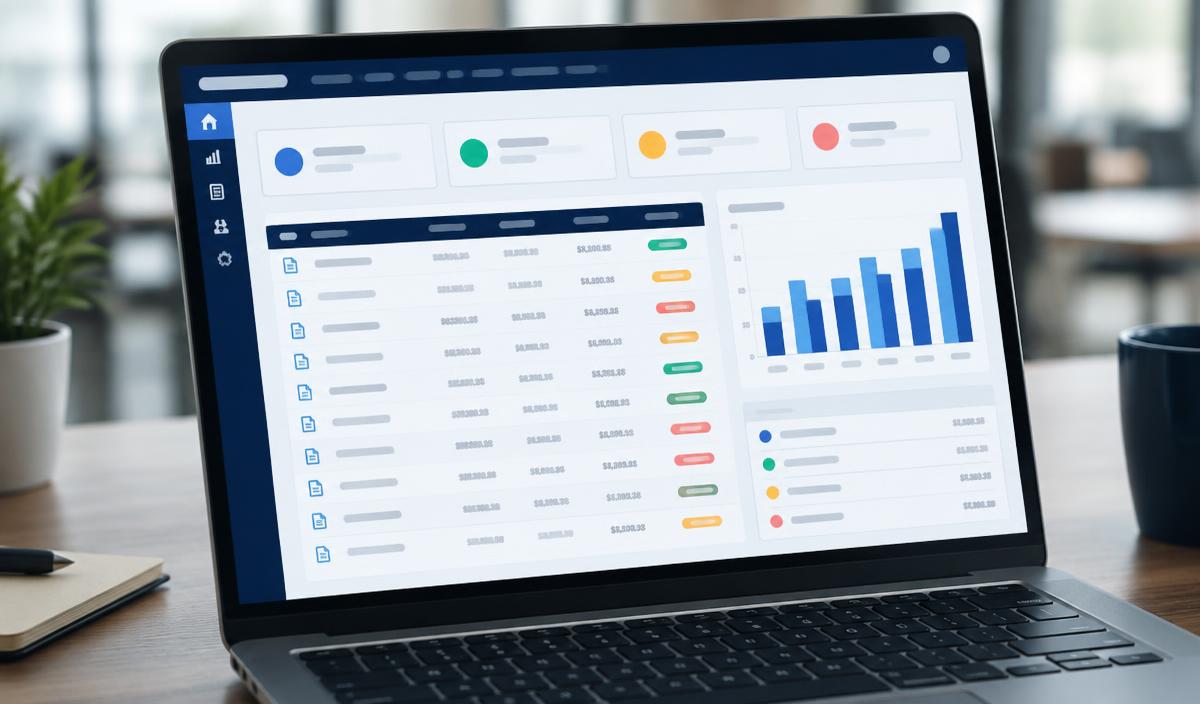
Tracking payment terms, sending the right reminder on time and calculating interest and recovery costs correctly takes time — and errors in the legal wording weaken your position in a dispute.
Credimigo is an AI-driven receivables platform built for SMEs across Europe. It sends the right reminder at the right moment, calculates statutory interest and recovery costs per country, keeps a complete and legally usable record of all communication, and improves cash flow without straining customer relationships. You remain the creditor — Credimigo is software, not a collection agency.
Frequently asked questions
How many reminders must I send before charging recovery costs to a business customer?
For business customers there is no mandatory pre-notice in most EU countries. Once the payment term has expired and the customer is in default, interest and reasonable recovery costs are due. In practice a reminder and a demand are still sent first.
What is the difference between a reminder and a demand?
A reminder is a friendly notice assuming the invoice was forgotten. A demand is firmer, sets a hard deadline and explicitly warns about interest, recovery costs and further steps.
What commercial interest rate applies in 2026?
In the Netherlands 10.4% per year since 1 July 2026, and 4% for consumer invoices since 1 January 2026. Elsewhere in the EU the minimum is eight percentage points above the ECB reference rate.
How much in recovery costs can I charge a business customer?
At least the fixed EUR 40 compensation, plus reasonable further costs. Under the Dutch scale: 15% of the first EUR 2,500 with a EUR 40 minimum, tapering to 0.5%, capped at EUR 6,775.
Can payment reminders be fully automated?
Yes. Platforms such as Credimigo automate the entire sequence, from the first friendly reminder to the final demand, including correct interest and recovery cost calculation.
Bronnen
Analyseer je eerste factuur gratis
Upload een openstaande factuur en zie binnen een minuut je Recovery Score, de juiste taal voor je debiteur en een kant-en-klare laatste aanmaning.
Analyse an invoice free