
Published 2026-09-21 · 11 min
Accounts receivable automation: the complete guide for businesses (2026)

Accounts receivable automation means software takes over invoicing, reminders, formal demands and follow-up on outstanding claims from your finance team — using scheduled reminders, payment-behaviour analysis and AI predictions about which customers are a risk. It shortens DSO, reduces write-offs and saves dozens of hours of manual work per month. Crucially, when you collect your own invoices in your own name, you stay outside the licensing regimes that apply to third-party debt collection agencies in most European countries.
What accounts receivable automation actually means
Late payments are not just an annoyance — they are one of the biggest direct threats to the cash flow of European SMEs. And the rules are tightening: across the EU, Directive 2011/7/EU on combating late payment gives every business an automatic right to interest and a fixed recovery fee, while national regimes increasingly license third-party collection agencies.
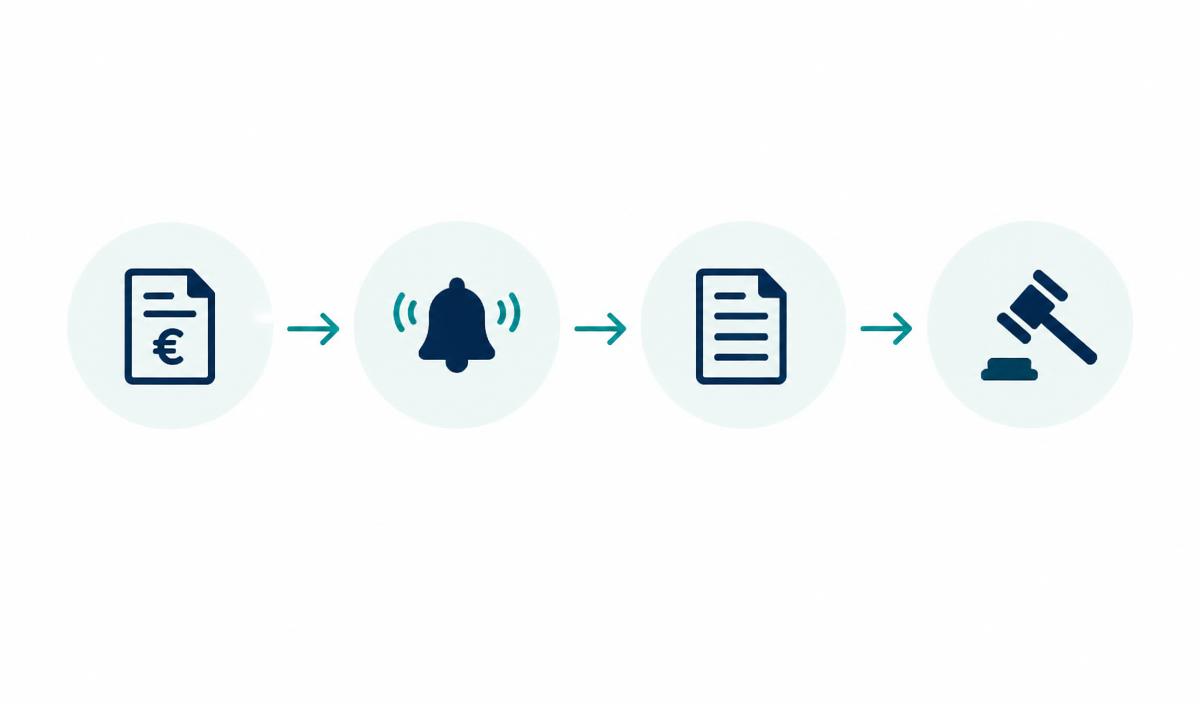
Accounts receivable management covers every step between sending an invoice and actually receiving the money: invoicing, payment reminders, formal demands, monitoring payment behaviour and — if things really go wrong — starting recovery proceedings.
Automating it means those steps no longer live in a spreadsheet or in scattered emails, but run through software that:
- sends reminders and demand letters automatically at predefined moments;
- calculates statutory interest and recovery costs correctly for each country;
- analyses customer payment patterns to flag risk early;
- keeps a full audit trail so you can act on solid legal ground in a dispute.
Why now? The 2026 numbers behind late payments
Three concrete developments make automation urgent this year.
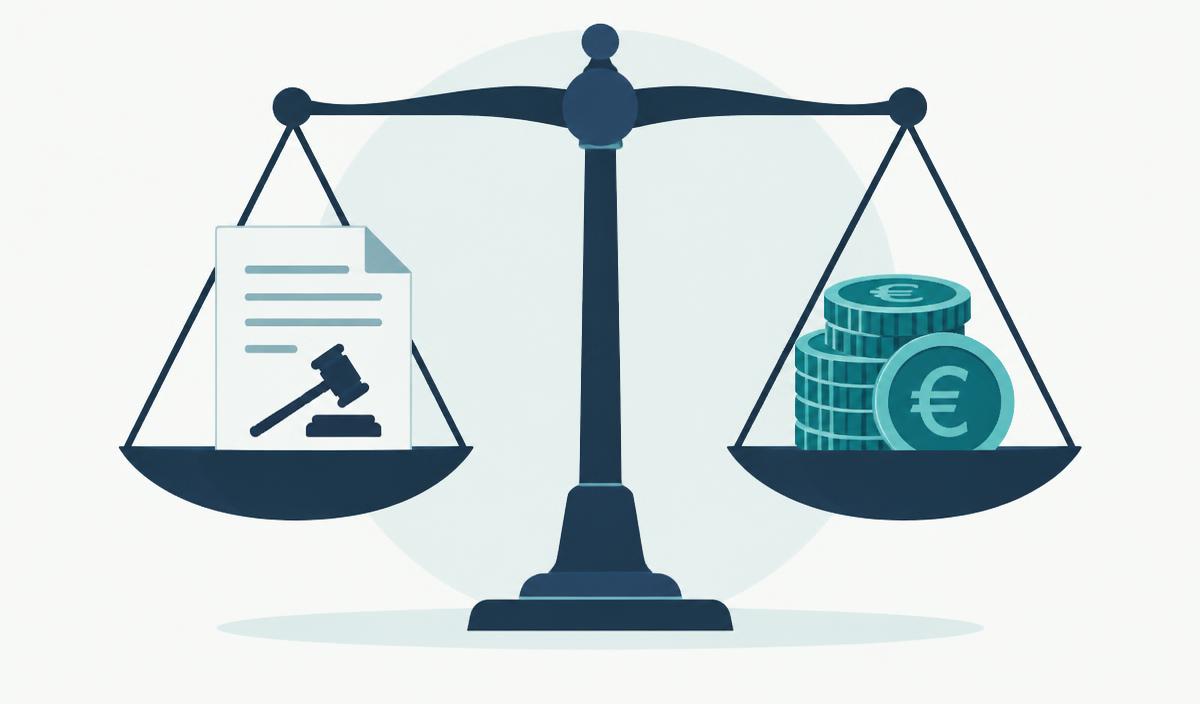
- Interest is worth claiming again. Under Directive 2011/7/EU the statutory late payment rate is the ECB reference rate plus at least eight percentage points; in the Netherlands the commercial rate stands at 10,4% since 1 July 2026. Businesses that never claim interest leave real money on the table.
- Manual receivables management does not scale. A company sending hundreds of invoices a month cannot chase every customer at exactly the right moment by hand.
- Regulation is tightening. Several EU countries now require third-party collection service providers to be registered or licensed, with direct civil consequences when they are not. Collecting your own claims keeps you outside those regimes.
Higher interest claims, stricter rules and growing invoice volumes together turn automation from a nice-to-have into a precondition for healthy cash flow.
The legal ground rules: interest, recovery costs and compliance
This is where most businesses lose money unnecessarily. Start with what you may charge on a late B2B invoice:
| Claim | Basis | Applies from |
|---|---|---|
| Statutory late payment interest | ECB reference rate + at least 8 percentage points (NL commercial rate 10,4%) | Day after the due date, automatically |
| Fixed recovery compensation | Minimum EUR 40 per invoice paid late | Day after the due date, automatically |
| Reasonable additional recovery costs | Actual costs above EUR 40, evidenced | After you incur them |
As a reference for cross-border work, the Dutch statutory scale for extrajudicial collection costs runs from 15% on the first EUR 2,500 (minimum EUR 40) down to 0,5% above EUR 200,000, capped at EUR 6,775.
On compliance: collecting claims on behalf of a third party, or after buying a claim, is a regulated activity in a growing number of member states. Self-collection — pursuing your own invoices, in your own name — falls outside those registration duties. That is exactly why software that lets your own team send automated reminders and demands has a fundamentally different regulatory profile from outsourcing to a collection agency. Credimigo is software: you remain the creditor and keep the customer relationship.
Six steps to automate your receivables
Work through the steps in order; each one makes the next more reliable.
- Step 1 — Map your current process. What is your average DSO, and where does the process stall?
- Step 2 — Standardise payment terms and tone of voice. Consistency is the foundation automation runs on.
- Step 3 — Automate the first reminder. A friendly nudge around the due date already prevents a large share of late payments.
- Step 4 — Build an escalation chain: friendly reminder, formal demand, then notice of default including statutory interest and recovery costs — timed automatically and legally sound.
- Step 5 — Monitor payment behaviour per customer so you spot risk before an invoice is even overdue.
- Step 6 — Secure the legal record. Log send dates, delivery confirmations and demands so you hold a watertight file in a dispute.
What to look for in automation software
Not every invoicing tool qualifies as a full receivables system. Check for:
- Accurate, up-to-date interest and recovery-cost calculation per country, updated automatically when rates change.
- A self-collection setup, so you stay outside third-party collection licensing regimes.
- Integration with your existing invoicing and accounting software.
- A complete audit trail of every debtor touchpoint.
- Customer-level insight, not just invoice-level.
- Independent payment processing through an external payment processor, keeping the separation between your business and the money flow transparent.
The role of AI in modern receivables management
Classic automation follows fixed rules: "send a reminder after 14 days". AI-driven receivables management goes further.
- Predictive risk management: models spot payment patterns a human misses and flag likely late payers before the due date.
- Personalised communication: tone and timing adapt to the relationship and history with that specific customer, in the debtor's own language.
- Built-in legal accuracy: statutory interest, cost scales and notice periods are applied correctly without your team tracking legislation.
- Scale without headcount: 50 or 5,000 open invoices, the process stays consistent.

Conclusion
In 2026 automating receivables is more than an efficiency play. It is how you actually capture statutory interest, stay compliant as collection rules tighten, and structurally strengthen cash flow.
Businesses that set this up now with a self-collection, AI-driven platform will be in far better shape than those still chasing invoices by hand.
Frequently asked questions
What is the difference between receivables management and debt collection?
Receivables management is the complete, continuous process from invoice to payment, including prevention. Debt collection is the specific track that starts once a claim is genuinely overdue and has to be actively pursued.
Do I need a licence to chase my own invoices automatically?
No. As long as your company pursues its own claims, for its own account, and does not perform collection work on behalf of third parties, third-party collection licensing regimes do not apply to you.
How much late payment interest can I charge a business customer?
Under Directive 2011/7/EU the statutory rate is the ECB reference rate plus at least eight percentage points, unless you contractually agreed a different rate. In the Netherlands the commercial rate is 10,4% since 1 July 2026.
Can I also charge recovery costs?
Yes. You are entitled to a fixed minimum of EUR 40 per late-paid invoice, plus reasonable evidenced recovery costs above that amount.
How much time does automation really save?
Companies that automate reminders, demands and interest calculations typically save dozens of hours of manual work a month and cut days to weeks off their DSO, because every invoice is followed up at the right moment.
Bronnen
Analyseer je eerste factuur gratis
Upload een openstaande factuur en zie binnen een minuut je Recovery Score, de juiste taal voor je debiteur en een kant-en-klare laatste aanmaning.
Analyse an invoice free