
Published 2026-09-21 · 9 min
AI in accounts receivable: what can you automate in 2026?

In 2026 six things in accounts receivable can be reliably automated with AI: predictive payment risk scoring, automatic cash application, personalised multichannel outreach, self-service payment portals, cash flow forecasting and the generation of legally correct reminders and demand letters. What stays human: disputed invoices, insolvency risk, sensitive payment-plan negotiations and long-standing customer relationships. AI removes the repetitive work so your team keeps time for the cases that matter.
Why AI is finally breaking through in receivables
Every business owner knows the feeling: an invoice three weeks overdue, a customer who does not respond, and a team burning hours on calls, emails and spreadsheet updates. Receivables management was long treated as admin — someone working down a list once a month. That approach no longer keeps up.
The difference is not faster software but software that behaves differently. Where traditional tools follow fixed rules ("send a reminder after 30 days"), AI learns per customer and per situation what works. Rule-based automation stalls at touchless processing of roughly half of incoming payments; AI matching pushes the large majority of payments to the correct invoice with no human involvement.
That matters across Europe, where most B2B payments still arrive late and finance teams spend structural time on invoices that could have been handled automatically.
What you can actually automate in 2026
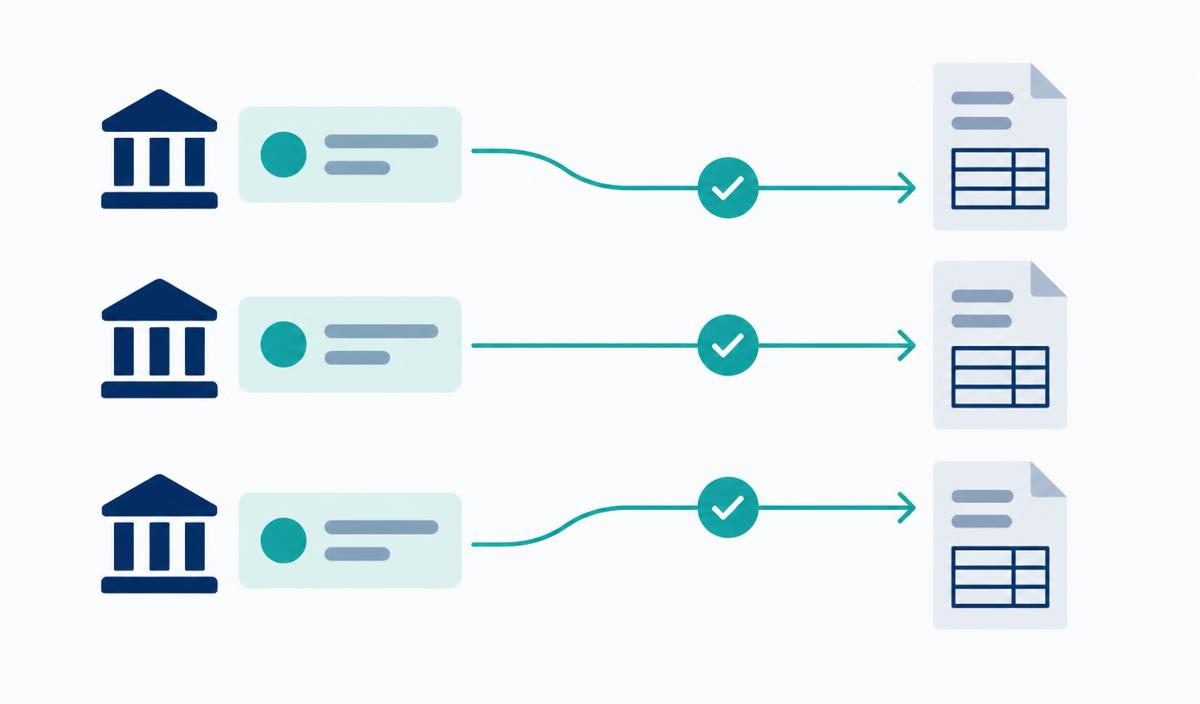
Six use cases are production-ready — daily practice, not pilots.
- Predictive payment risk scoring. AI scores every account on payment history, sector, company size and behaviour. Likely self-payers get a light nudge; high-risk accounts get priority and personal follow-up.
- Automatic cash application. Partial payments, mismatched references and bundled transfers are matched to the right invoice automatically.
- Personalised multichannel outreach. AI decides when and through which channel to reach a customer, and adapts tone to the relationship and risk profile.
- Self-service payment portals. Customers view open invoices, set up a payment plan or pay immediately without calling anyone.
- Cash flow forecasting. Models predict when money actually lands, not when it is contractually due.
- Automated reminders and formal demand letters. Legally correct documents including statutory notice periods, so a procedural mistake never undermines your claim.
What stays human work — for now
AI does not replace human judgement in complex situations. Long-standing relationships, disputed invoices, insolvency risk and sensitive negotiations over payment plans still need a person.
AI is strongest at removing repetitive work. That is where the gain sits: less time on low-risk accounts, more time on disputes and high-risk customers.

How Credimigo applies this in practice
Credimigo is built on exactly this principle: AI takes over the repeatable work while you stay in control. The platform automates the full track from the first payment reminder to a legally sound self-collection process, with an independent payment processor keeping money flows transparent and secure.
Important: Credimigo is self-collection software, not a collection agency. You remain the creditor and the owner of the process, which keeps the platform outside the licensing regimes that apply to third-party collection agencies.
Practical steps to start in 2026
Start small and measure; that convinces faster than a large implementation programme.
- Map your current process: where does the time go — reminders, matching or phone calls?
- Start with the low-hanging fruit: automated reminders and cash application deliver returns fastest with the least effort.
- Guard legal accuracy: automated communication must meet the collection rules of your debtor's country.
- Keep personal follow-up for high risk: let AI segment, deploy people where it matters.
- Measure DSO and touchless rate: these two KPIs show whether automation truly works.
Frequently asked questions
What is AI-driven accounts receivable management?
It means software independently follows up outstanding claims, estimates payment risk and personalises communication — based on patterns in data rather than fixed rules.
Is AI in receivables affordable for small businesses?
Yes. What was reserved for large enterprises a few years ago is now available as cloud solutions priced for SMEs, with a low entry threshold and monthly subscriptions.
Does AI replace the collections specialist?
No. AI takes over repetitive tasks — reminders, matching, prioritisation — while complex files, disputes and the customer relationship remain human work. AI frees up time for exactly those cases.
What is the difference between self-collection software and a collection agency?
With self-collection software you remain the principal of the process; the platform supports and automates it. A collection agency effectively takes the claim over and falls under collection licensing rules.
Is automated receivables management GDPR-proof?
That depends on the vendor. Choose a platform that processes personal data under a clear data processing agreement and uses an independent, PCI-compliant payment processor.
Bronnen
Analyseer je eerste factuur gratis
Upload een openstaande factuur en zie binnen een minuut je Recovery Score, de juiste taal voor je debiteur en een kant-en-klare laatste aanmaning.
Analyse an invoice free