
Published 2026-10-13 · 8 min
Outsource or automate accounts receivable? How to make the right choice
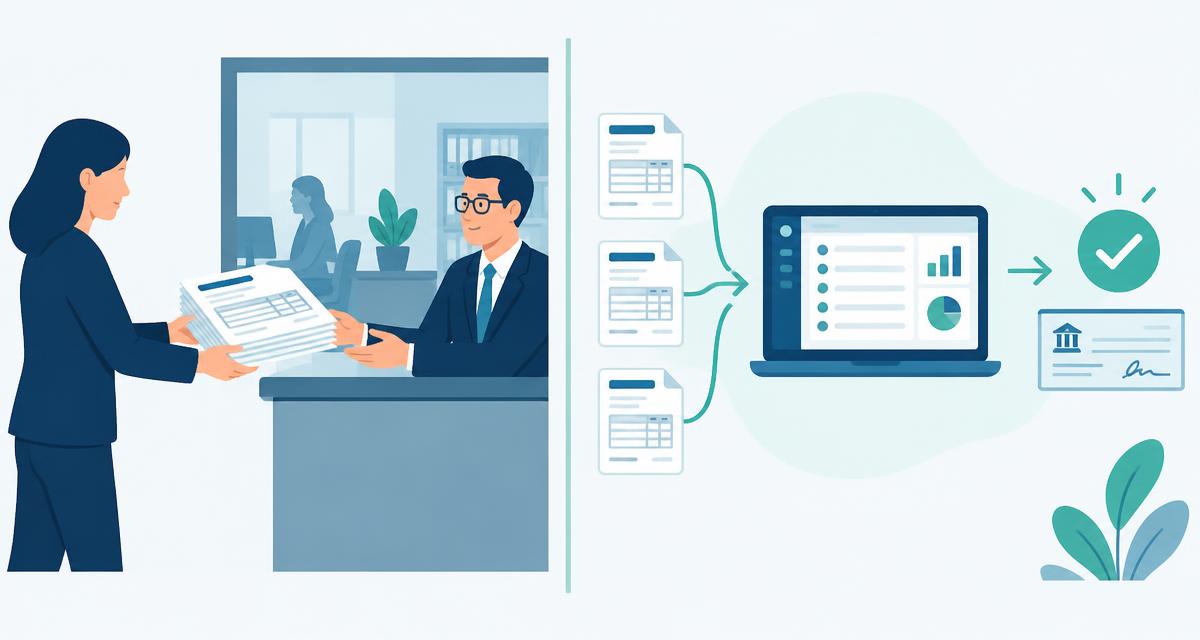
Automate your accounts receivable if you invoice regularly, want to keep the customer relationship and prefer fixed costs. Outsource it if your files are complex, often disputed, or you have no internal capacity at all. For most SMEs a combination works best: automate follow-up from day one and outsource only the difficult files. Invoicing Dutch consumers or sole traders? Any outside party collecting on your behalf must then be in the Justis Wki register.
Why this question matters now
Dutch businesses are paying worse than a year ago. According to Altares Dun & Bradstreet, more than a quarter of invoices were paid late in 2025: the share rose from 23.9% to 25.3%, the first deterioration since 2001. Smaller businesses in particular paid late more often.
Payment times are rising too: on average 59 days from order to payment, plus another 29 days when there is a dispute.
Every day an invoice stays open, you are financing your customer. You need a system that follows up. The only question is: does someone else do it, or does software?
What does outsourcing accounts receivable mean?
An outside party – an accounting firm, a freelance credit controller or a specialised agency – takes over the follow-up of your open invoices. They call, email and send reminders on your behalf.
You usually pay per hour, a fixed monthly fee or a percentage of what is collected. Freelance credit control in the Netherlands typically costs €40–€75 per hour, depending on experience and assignment.
- Pros: no hassle, expertise on hand, personal attention for complex files.
- Cons: costs grow with volume, you depend on someone else's availability, and your customer deals with a party that doesn't know your tone or relationship.
What does automating accounts receivable mean?
Software takes over the follow-up. On the due date a reminder goes out automatically, then a demand letter and, where needed, the statutory Dutch 14-day letter. Your customer can pay online immediately and you see everything outstanding in one overview.
The key difference: you remain the creditor and the sender. Everything goes out in your name and tone. Legally this is self-collection: you collect your own claims, without an intermediary.
- Pros: follow-up always happens on time, costs are fixed and predictable, it scales with growth and you keep the customer relationship.
- Cons: it needs a proper one-time setup, and truly complex or disputed files still need human work.
Manual, outsourced or automated: the overview
| Manual in-house | Outsourcing | Automating | |
|---|---|---|---|
| Who follows up? | You or your team | An outside party | Software, in your name |
| Cost | Your hours | Hourly rate, fixed fee or commission | Fixed subscription |
| Speed | When there's time | As agreed with the party | Immediately, on the due date |
| Customer relationship | Fully yours | Partly with the outside party | Yours, in your tone |
| Scalability | Low | Costs grow with volume | High, costs stay almost flat |
| Wki registration (NL) | Not needed | Needed when collecting from consumers and sole traders | Not needed for your own claims |
| Strong at | Few invoices | Complex files, no own capacity | Volume, speed, predictable cash flow |
What does it cost? A worked example
Say you send 80 invoices a month and a quarter are paid late: 20 invoices need follow-up. At three 15-minute contacts per invoice plus admin, that's about 16 hours a month.
- Manual: 16 hours × €60 (the value of your own hour) = €960 a month – plus what you don't sell or deliver in those hours.
- Outsourcing: 16 hours × €55 external rate = €880 a month. Coordination and handover remain your time.
- Automating: €150 example subscription + 2 hours of review × €60 = €270 a month.
This is an indicative example; the €150 subscription is illustrative, not a Credimigo price. Plug in your own numbers. The pattern stays the same: manual and outsourced costs grow with every extra invoice, automated costs stay almost flat.
And there's a second effect: the faster you follow up, the fewer invoices reach the collection stage. A reminder on day one beats a phone call on day 30.
The Wki trap when outsourcing (Netherlands)
Under the Dutch Debt Collection Services Quality Act (Wki), strict rules apply to anyone collecting money on behalf of others from individuals living in the Netherlands – including sole traders and partners in a general partnership – even if they do it alongside other work.
So if you outsource follow-up to an accounting firm or freelancer and invoice consumers, freelancers or partnerships, check they are in the Justis register. Since 1 October 2026 no collection costs may be charged by an unregistered collection service provider.
With automation this doesn't apply: you collect your own claims and the software is your tool. Collecting your own claims falls outside the registration duty. See also Debt collection agency vs accounts receivable software.
Decision guide: six questions
- Do you send more than 20 invoices a month? Yes: automate – manual follow-up structurally costs hours.
- Do you want to keep the customer relationship? Yes: automate – reminders go out in your name and tone.
- Are your files complex or often disputed? Yes: outsource those files (partly) – negotiation needs people.
- Is your invoice volume growing fast? Yes: automate – software scales without extra hours.
- Do you have no internal capacity at all? Yes: outsource, or automate so you barely need any capacity.
- Do you invoice Dutch consumers or sole traders? Mind the Wki: an outside party must be registered with Justis.
Three or more "automate" answers? Software is almost certainly the best first step.
The smartest choice: automate first, outsource only the rest
It isn't either-or. Most late payments aren't unwillingness: the invoice was forgotten, sits with the wrong person, or there's a temporary cash squeeze. Timely, friendly follow-up solves those fastest and cheapest – that's what automation is for.
What's left is a small group of real problem files. Only those need to go to a registered collection agency, bailiff or lawyer. Read When to hire a debt collection agency and Debt collection agency costs in 2026.
That way you only pay for human work where it's really needed.
How Credimigo automates your accounts receivable
Credimigo is an AI team for your complete receivables process, from invoice to payment:
- Invoicing and reminders: automatic follow-up from the due date, with the right tone per stage.
- AI calling agents: phone follow-up happens automatically too.
- Online payment: your customer pays via a payment link and the money goes straight to you.
- All of Europe, every language: follow-up in your customer's language.
- You stay the creditor: everything in your name – it remains self-collection.
This article is for information only and is not legal advice. Figures valid as of 13 October 2026.
Frequently asked questions
What is the difference between outsourcing and automating accounts receivable?
Outsourcing means an outside party follows up your invoices, usually for an hourly rate, fixed fee or commission. Automating means software does it in your name for a fixed subscription, so you keep control and the customer relationship.
What does outsourcing accounts receivable cost?
It depends on the party and model. Dutch freelance credit controllers often charge €40–€75 per hour; agencies also use fixed monthly fees or a percentage of the amount collected. More invoices means higher costs.
What does automating accounts receivable cost?
A fixed subscription that barely rises with the number of invoices, plus a few hours a month for review and exceptions.
Does outsourcing require Wki registration?
If an outside party collects on your behalf from Dutch consumers, sole traders or partners, it must be registered with Justis – also if it does this alongside other work.
Do I need Wki registration if I automate?
No. With software you collect your own claims; that is self-collection and falls outside the registration duty.
From how many invoices is automation worth it?
As a rule of thumb from about 20 invoices a month, or once follow-up takes more than a few hours a month.
Can I combine automating and outsourcing?
Yes, and that's often best: software handles standard follow-up; only stubborn or disputed files go to a registered agency, bailiff or lawyer.
Will I lose the customer relationship if I automate?
No, rather the opposite. Reminders go out in your name and tone, and your customer can pay directly.
Bronnen
- Accountant.nl – Dutch payment behaviour deteriorated (16 June 2026) (NL)
- Accountant.nl – Dutch businesses wait 59 days on average (3 April 2026) (NL)
- Justis – Who does the Wki apply to? (NL)
- Justis – Register of debt collection services (NL)
- Rijksoverheid – No collection costs for unregistered providers (NL)
Analyseer je eerste factuur gratis
Upload een openstaande factuur en zie binnen een minuut je Recovery Score, de juiste taal voor je debiteur en een kant-en-klare laatste aanmaning.
Analyse an invoice free